Slip Resistant Flooring for Daycare That Works
Table of contents
A daycare floor has a demanding job. It needs to handle water tracked in from outdoors, spilled cups at snack time, paint at activity tables, frequent cleaning, rolling carts, and fast-moving little feet. Slip resistant flooring for daycare helps turn those everyday messes into manageable moments instead of preventable hazards.
The right choice is not simply the roughest floor available. Young children also need a surface that is comfortable enough for floor play, easy to clean thoroughly, visually calm, and appropriate for the way each room is used. A thoughtful flooring plan protects children and staff while keeping the environment warm, practical, and inviting.
What Daycare Flooring Needs to Handle
Daycare surfaces see more activity than most residential rooms. Children may move quickly from a wet restroom to a classroom, sit directly on the floor during circle time, crawl through play areas, and drop food, sensory materials, or art supplies throughout the day. Staff need a floor that supports secure footing while standing, lifting, cleaning, and supervising.
Traction matters most in areas where moisture is expected, including entryways, handwashing stations, restrooms, food-prep zones, and water-play areas. But a floor can be slip resistant and still be a poor fit if its texture holds dirt, its seams let moisture through, or its edges create a trip risk.
For daycare settings, look at the full system: the flooring material, its finish, the transitions between rooms, cleaning methods, and the safety treatment used in specific wet zones. A good-looking floor is a benefit. A floor that continues to perform after repeated mopping and daily use is the priority.
Choosing Slip Resistant Flooring for Daycare
The best material depends on the room, the age group served, the condition of the existing subfloor, and local licensing or building requirements. Before installing a new surface, confirm requirements with the appropriate local authority and ask the flooring supplier for documentation relevant to commercial or educational use. A product labeled “non-slip” is not automatically right for every daycare environment.
Sheet vinyl for easy-clean classrooms
Commercial sheet vinyl is often a strong option for classrooms, nap areas, and multi-use rooms. With fewer seams than tile or plank layouts, it can be easier to clean and less likely to trap spills. Many styles offer lightly textured finishes that improve footing without feeling abrasive under small hands and knees.
Sheet vinyl can also support a more cheerful design direction. Soft wood looks, quiet patterns, and bright but balanced colors can make rooms feel less institutional. The trade-off is installation: proper subfloor preparation and seam work are essential, especially where moisture is common.
Luxury vinyl tile and plank for flexible design
Luxury vinyl tile or plank can offer a durable, design-forward finish with a more structured look. It works well in offices, reception areas, classrooms, and hallways when selected with an appropriate slip-resistant wear layer and installed correctly.
Because LVT has more joints than sheet vinyl, it deserves extra attention around sinks, toilets, and areas with frequent wet cleaning. Water that reaches poorly sealed edges can create maintenance problems over time. For consistently wet rooms, sheet goods or another more water-managed option may be the better choice.
Rubber flooring for active spaces
Rubber flooring is a practical consideration for indoor play rooms, gross-motor areas, and spaces where children spend substantial time on the floor. It provides natural grip and more underfoot comfort than many hard surfaces. It can also soften the feel of an active room without adding loose rugs that may shift or bunch.
Rubber is not a one-size-fits-all answer. Some products have a distinct odor after installation, and textured finishes can require more deliberate cleaning. Ask about low-emitting options, cleaning compatibility, and whether the material is suitable for the disinfectants your facility uses.
Ceramic or porcelain tile for wet rooms
Tile can be highly durable and water resistant, making it useful in restrooms or dedicated water-use areas. The key is choosing a finish designed for wet conditions. A glossy tile may look clean and bright, but it can become slick when water or soap is present.
Grout lines also require ongoing attention. They can add grip, but they can collect soil and need regular maintenance. Use tile where its water resistance is valuable, not simply because it is familiar.
Texture Should Improve Grip, Not Complicate Cleaning
A floor needs enough texture to help shoes and socks hold on when conditions are less than perfect. Too much texture, however, can catch dirt, food particles, modeling dough, and cleaning residue. That creates a hygiene burden and may eventually reduce the very traction the surface was meant to provide.
Ask suppliers how the flooring performs when wet and how it should be cleaned. Review the recommended cleaning products as well. Wax buildup, greasy residues, and using an incompatible finish can make a slip-resistant surface less effective.
For facilities, a sample is worth more than a product photo. Place it in the actual light of the room, feel its texture, and consider how it will look after a busy week rather than on installation day. Staff members who clean and supervise the space should be part of the decision.
Protect the High-Risk Zones Without Creating New Hazards
A whole-floor replacement is not always necessary. Sometimes the immediate concern is a specific smooth, wet area: the floor in front of a child-height sink, a restroom threshold, a changing-area transition, or an entrance where rain and snow are tracked inside.
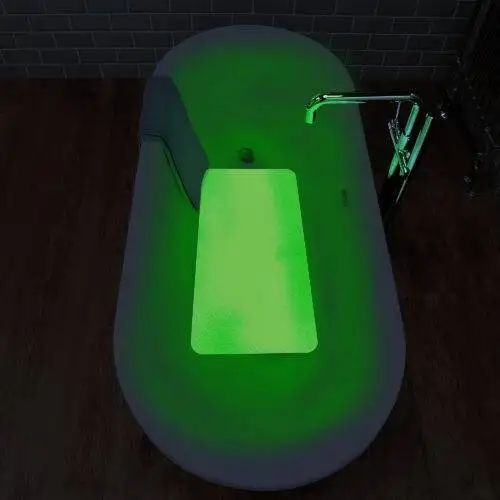
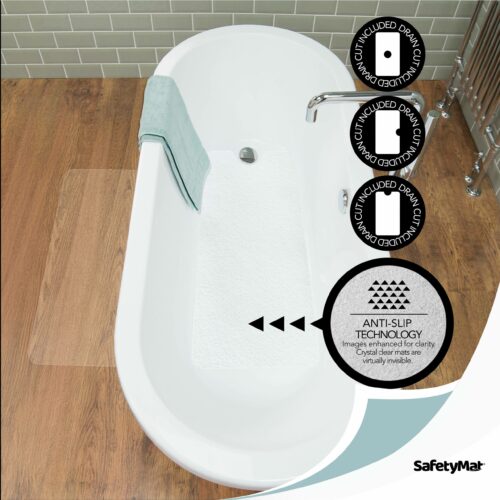
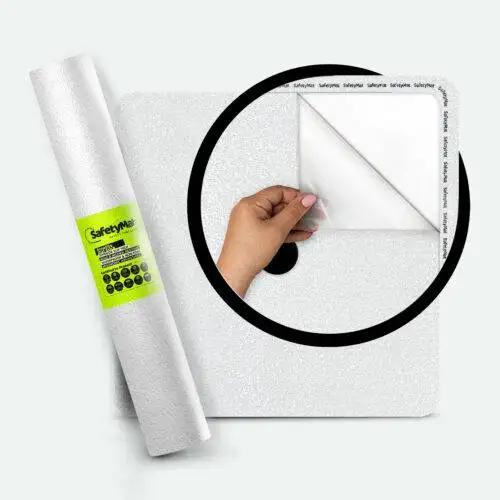
This is where ultra-thin, adhesive-backed safety coverings can add targeted protection. Unlike loose mats, a properly applied low-profile surface does not curl at the corners, slide away from the spot it is meant to cover, or create a bulky obstacle for small feet and rolling equipment. SafetyMat products can be a practical option for indoor, smooth-surface zones that need added traction without a major renovation.
Targeted coverings are not a substitute for addressing damaged flooring, standing water, failed seams, or poor drainage. If the underlying floor is cracked, lifting, or regularly saturated, repair the source of the problem first. Safety layers work best on a clean, dry, sound surface with edges placed where traffic will not catch them.
Plan for Transitions, Footwear, and Daily Routines
Many slips occur at the change between one surface and another. A wet restroom floor meeting a smooth hallway, a thick mat at an entry, or an uneven flooring patch can interrupt a child’s step. Keep transitions low, secure, and visually clear. Avoid loose area rugs in routes used for running, lining up, or moving supplies.
Flooring should also support the routines that keep traction working. Wipe spills promptly, post a temporary caution marker during wet mopping, and use entrance mats that are firmly secured and sized for the traffic they receive. Check for worn areas, loose edges, residue, and puddling during regular room inspections.
Children’s footwear varies widely, and some children will be in socks or barefoot during play. That is another reason to choose flooring based on real use, not just an appearance label. A surface that feels stable under different types of feet gives staff more confidence during the busiest parts of the day.
Keep the Design Calm, Clear, and Child-Friendly
Safety does not need to make a daycare look clinical. Flooring can help organize the room through color and pattern, creating visual boundaries for reading corners, quiet zones, activity tables, and walking routes. Choose patterns that do not disguise spills or create confusing visual movement for young children.
Avoid overly glossy finishes in busy spaces. They can show wet spots dramatically under bright lighting and may make a room feel more like a hard commercial corridor than a welcoming place to learn and play. Matte or low-sheen surfaces generally offer a softer appearance while supporting a practical maintenance routine.
The best daycare flooring decision is one that makes daily care easier for the people responsible for children. Start with the wettest, busiest areas, choose a surface that staff can clean confidently, and make every transition feel secure. Small improvements in traction can help create a room where children are free to move, play, and grow with fewer avoidable interruptions.
Add visual guidance only after the floor plan is safe
Once traction, cleaning, transitions, supervision, and local requirements are addressed, explore child sensory pathways, classroom floor cues, and the parent guide to custom-printed slip-resistant flooring.