Indoor Floor Decals for Classrooms That Work
A classroom floor has a job beyond holding desks and chairs. It guides busy arrival routines, gives children a place to wait, supports movement breaks, and helps educators create order without repeating directions all day. The right indoor floor decals for classrooms can make those moments clearer while keeping the room easier to clean and safer to move through.
Unlike loose rugs, floor decals sit close to the surface. That low-profile design matters in spaces where small feet, rolling chairs, mobility devices, and quick transitions are part of the daily routine. Still, not every decal belongs in every location. Material, placement, traction, and the condition of the existing floor all deserve attention before installation.
What Classroom Floor Decals Can Do
Floor visuals work because they communicate at the point where students are already looking and moving. A line of footprints can show a quiet path to the door. Colored circles can define where children stand during attendance. A hopscotch-style pattern can turn an unused stretch of hallway-side floor into a short movement station.
For early learning rooms, decals often support routines that are still being learned: where to sit, where to line up, where to return supplies, or which direction to walk. In elementary classrooms, they can organize stations and reduce crowding around popular areas such as cubbies, reading corners, and sinks. Sensory pathways can offer a purposeful outlet for movement between seated tasks.
The practical benefit is not simply decoration. Clear visual cues can reduce verbal reminders, help students move more independently, and make shared spaces feel more predictable. For a teacher or facilities manager, that means the design should be easy to understand at a glance, not overly busy.
Choose Indoor Floor Decals for Classrooms by Use
The best choice depends on what the decal needs to accomplish. A decorative border along a reading area has different requirements than a directional marker placed near a handwashing station.
Directional and routine markers
Arrows, footprints, lines, numbered spots, and simple icons help manage transitions. Keep the visual language consistent. If blue footprints mean “walk this way,” use them the same way throughout the room rather than mixing colors and symbols without a clear purpose.
Avoid placing markers where they create a bottleneck. A line-up decal should provide enough spacing for children to stand comfortably without blocking a doorway, emergency route, or access to classroom supplies.
Learning zones and seating spots
Decals can define a rug-free circle-time area, an independent-work seat, a makerspace boundary, or a place to wait for help. Individual spots are especially useful when students need personal space but permanent furniture layouts are not practical.
Choose designs with enough contrast against the existing floor to be visible. A pale gray circle may look refined on a screen but disappear against a speckled classroom tile floor. Color should support clarity first, then coordinate with the room.
Sensory and movement pathways
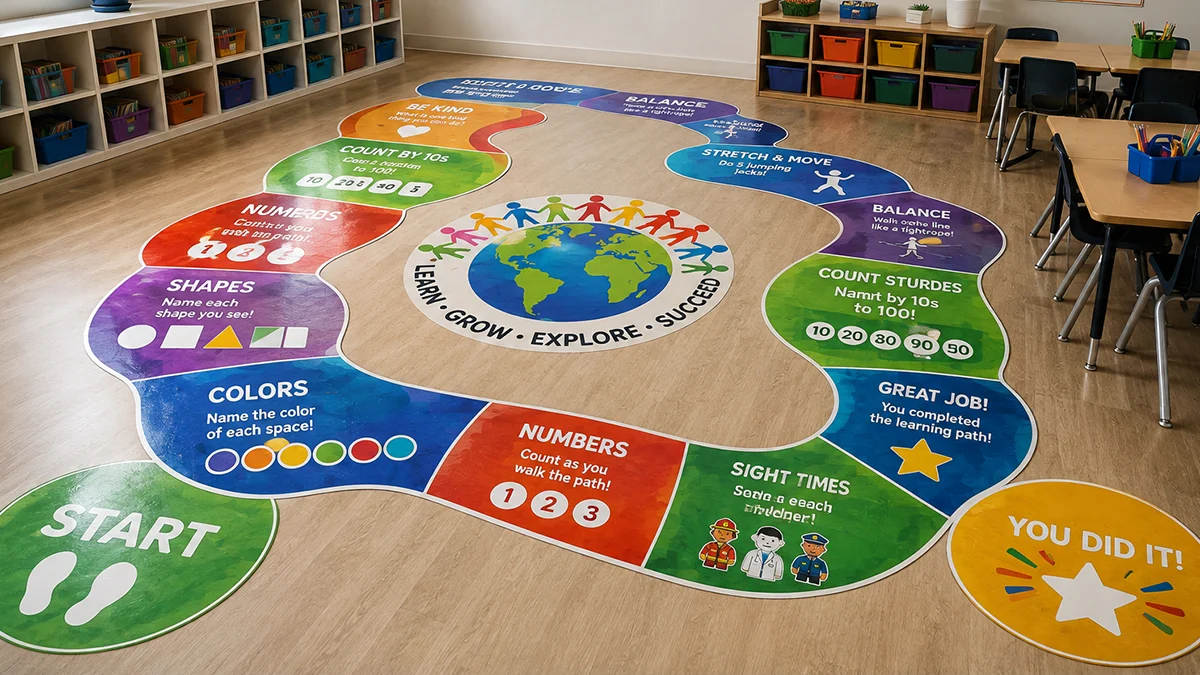
Paths with steps, jumps, turns, balance prompts, or animal movements can give students a quick, structured break. These are often most useful near a calm-down corner, outside a classroom door, or along a section of open floor that does not interfere with instruction.
The trade-off is visual stimulation. A large, high-energy pathway in the center of a classroom may distract from lessons. In a smaller room, a shorter sequence or a few movement prompts can be the better fit.
Wet-area reminders and traction support
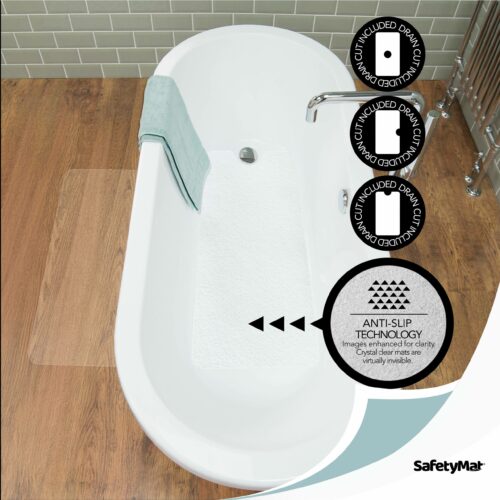
Near drinking fountains, sinks, art cleanup areas, and classroom bathrooms, floors can become slick quickly. A decal may provide a visual reminder to slow down, but a safety-focused, slip-resistant surface treatment is more appropriate when the main concern is traction. Look for products designed for indoor wet or smooth surfaces, with waterproof adhesion and a low-profile edge that will not become a trip point.
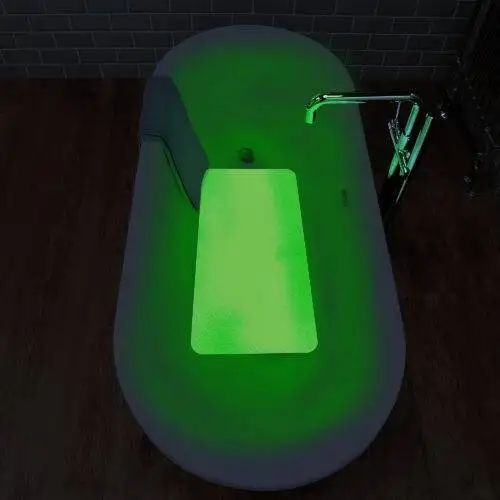
SafetyMat-style peel-and-stick safety surfaces are particularly suited to locations where a traditional rug would shift, absorb moisture, or need constant laundering. The goal is straightforward: add protection without adding bulk.
Placement Matters as Much as the Design
Before choosing a pattern, walk through the room as students use it. Notice where backpacks land, where traffic crosses, where water appears, and where children tend to gather. A decal that looks attractive in an empty room can become a problem if it sits beneath a rolling cart or directly in front of a door.
Keep floor decals away from door swings, fire exits, and areas where they could cover required safety markings. Do not use them to disguise damaged flooring, loose tiles, or cracked surfaces. Those conditions need repair first. Decals adhere best to clean, smooth, sound flooring, and they cannot make an unstable surface safe.
Consider cleaning routines, too. Decals in high-traffic areas should tolerate regular mopping according to their care instructions. If custodial staff use strong chemicals or floor machines, confirm compatibility before installation. A product that works well in a residential playroom may not hold up to a school’s cleaning schedule.
How to Install Them for a Clean, Low-Profile Finish
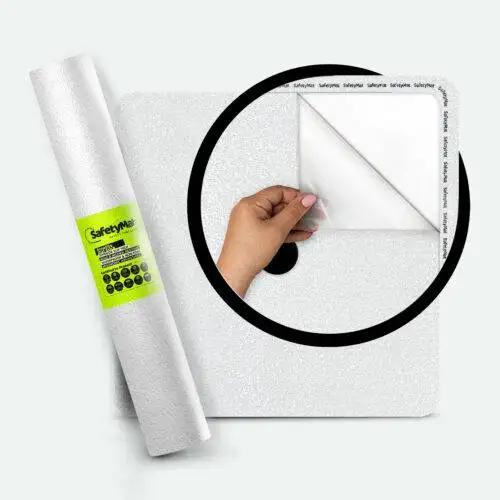
Peel-and-stick products are designed to simplify installation, but preparation determines how well they perform. Start with a dry, clean floor free of dust, grease, wax residue, and cleaning-product film. If the surface was recently washed, allow it to dry completely before applying anything adhesive-backed.
Plan the arrangement before removing the backing. Use a measuring tape and painter’s tape to test the spacing of spots, paths, or borders. Stand at the room entrance and check whether the design reads clearly from a child’s eye level and from an adult’s viewpoint.
Apply each piece slowly, pressing from one side toward the other to minimize trapped air. Pay special attention to edges, since lifted corners collect dirt and can catch shoes. Follow the manufacturer’s recommended temperature and cure-time guidance before heavy use or wet cleaning.
For larger layouts, it helps to install in sections rather than trying to complete the entire design during a busy school day. A quiet afternoon, teacher workday, or break between terms gives the adhesive time to settle without immediate foot traffic.
Keep the Classroom Safe After Installation
Floor decals are not a set-it-and-forget-it solution. Build a quick check into regular room resets. Look for curled edges, worn graphics, tears, or reduced adhesion, particularly near sinks and entrances. Replace damaged pieces promptly instead of waiting for a full redesign.
Cleaning should be simple and consistent. Sweep or vacuum loose debris, then mop using the product’s approved method. Avoid abrasive scrubbers that can damage the printed surface or catch decal edges. When a spill occurs, clean and dry the area promptly, even if the decal itself is water-resistant.
It also helps to review the layout after the first few weeks. Students may reveal traffic patterns no floor plan could predict. If a line-up spot is constantly skipped or a movement path creates congestion, move or simplify it. Flexible visual guidance is one of the biggest advantages of decals, provided the flooring underneath remains protected.
A Better-Looking Way to Support Everyday Routines
Well-chosen classroom floor decals do not need to make a room look institutional. They can echo the classroom color palette, use friendly shapes, and give students useful cues without covering every open inch of floor. The most effective designs feel intentional: easy to notice, easy to follow, and quiet enough to let learning remain the focus.
Start with one friction point in the school day, whether it is lining up, waiting at the sink, or taking a movement break. A simple, secure floor cue can turn that small daily challenge into a routine children can follow with more confidence.
Choose the classroom-floor path by purpose
For a movement sequence, start with the sensory pathway planning guide. For a custom learning, branding, wayfinding, or room-coordination project, use the custom-printed flooring guide. For broader facility decisions, compare daycare flooring considerations.