Peel-and-Stick Floor Tiles vs. SafetyMat
Table of contents
Floor tiles are commonly selected to resurface or decorate. SafetyMat is engineered first as a functional safety surface, with coverage and design options built around that purpose.
Side-by-side decision factors
| Decision factor | Peel-and-stick floor tiles | SafetyMat |
|---|---|---|
| Primary purpose | Decorative resurfacing or flooring; product dependent | Functional safety-surface coverage |
| Slip resistance | Product dependent | Use the verified specification for the selected SafetyMat material and grade |
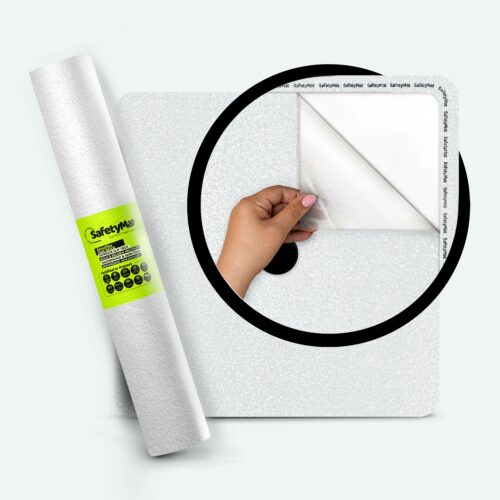
| Coverage format | Multiple individual pieces | Standard mats, larger rolls, or custom-sized coverage |
| Seams | Many seams depending on tile size and room | Fewer seams may be possible with larger sizing |
| Water exposure | Product and installation dependent | Waterproof vinyl material; edges, seams, drains, and substrate still matter |
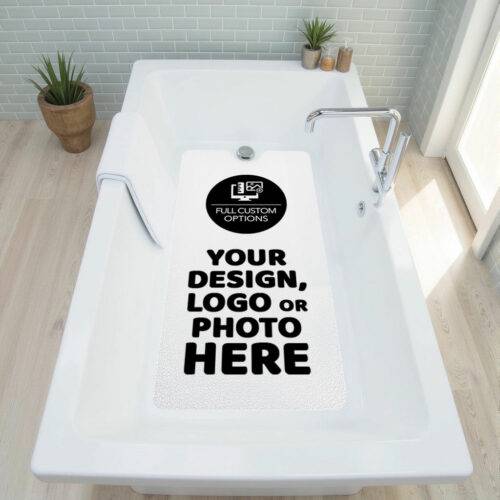
| Custom design | Product dependent | Custom artwork and printed options are available for suitable projects |
| Surface compatibility | Product dependent | Requires a compatible, sound, smooth, clean, dry surface |
| Removal | Product and substrate dependent | Removal response depends on substrate, preparation, exposure, and time installed |
| Role in the floor | May function as a finish-floor product | Targeted surface solution; not structural repair or a universal flooring system |
Peel-and-stick tiles may fit when…
SafetyMat may fit when…
Safety does not have to look institutional.
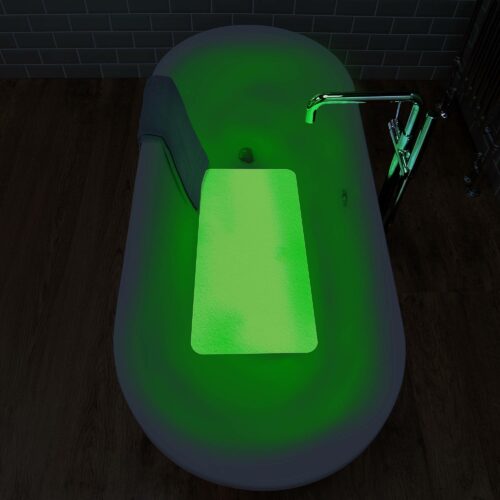
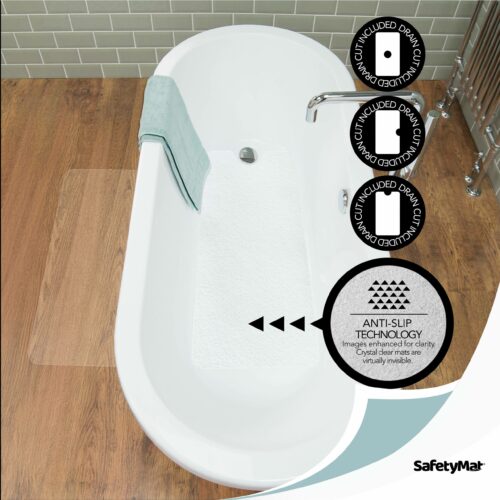
SafetyMat can combine a functional walking surface with clear, white, glow, custom-sized, or printed presentation. Residential spaces can coordinate with the room; businesses can add branding; schools can use educational graphics; facilities can use wayfinding. The selected material, grade, design, and application must still be verified for the project.
Preparation is part of the product decision
Inspect
Find loose flooring, damage, moisture, coatings, texture, contamination, and height transitions.
Measure
Plan the exact zone, seams, drains, fixtures, door clearance, and edges.
Match
Confirm the product and adhesive are intended for the substrate and exposure.
Follow
Use the exact preparation, dry-installation, pressure, cure, cleaning, and removal instructions.