Custom Printed Non Slip Mat Ideas for Safer Rooms
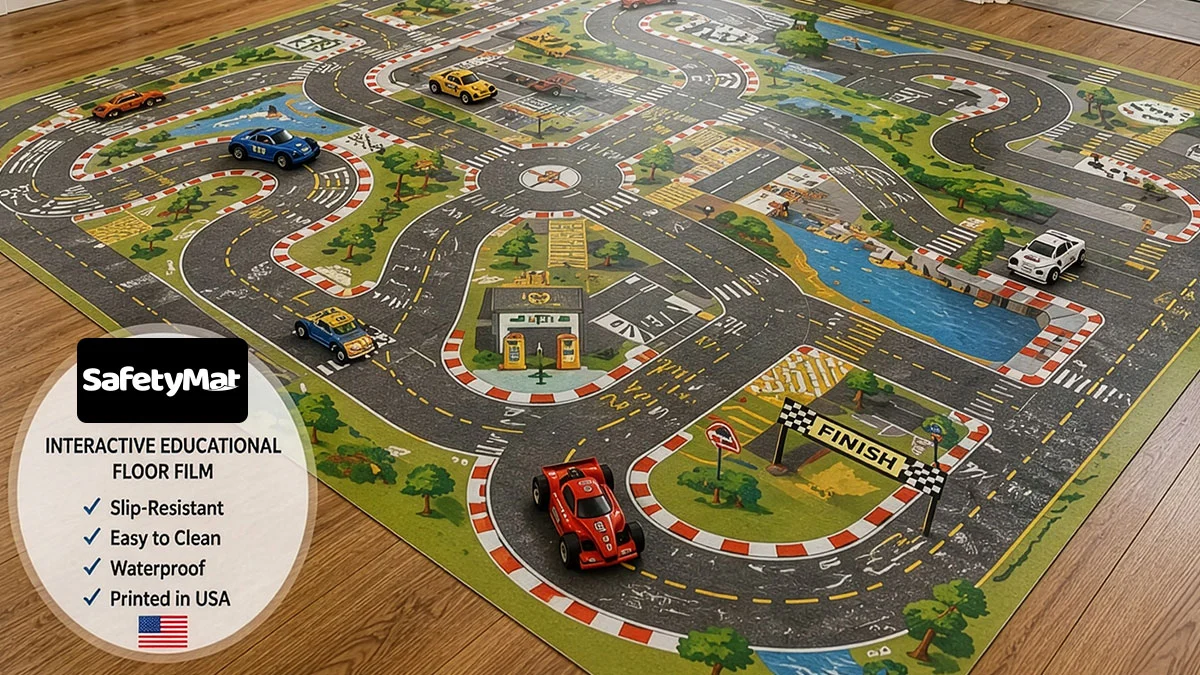
A wet bathroom floor does not become safer because a mat happens to match the towel color. It becomes safer when the surface stays in place, covers the right area, and gives bare feet reliable traction. A custom printed non slip mat makes that practical protection feel intentional, whether you want a calm spa-style shower, a cheerful kids’ bath, or a kitchen floor that works with the rest of the room.
For households that have dealt with sliding bath rugs, damp fabric, or suction mats that collect grime, a thin peel-and-stick surface is a different approach. It stays low to the floor, avoids a raised edge that can catch a toe, and gives you more control over the color, pattern, or visual cue underfoot.
Why custom safety surfaces make sense
Most slip hazards happen in familiar rooms, not dramatic ones. A shower exit, the area in front of a sink, a kitchen work zone, or a stair landing can become slick in seconds. Standard mats are often added after the fact, which is why they can look out of place, bunch up, or move when someone steps on them.
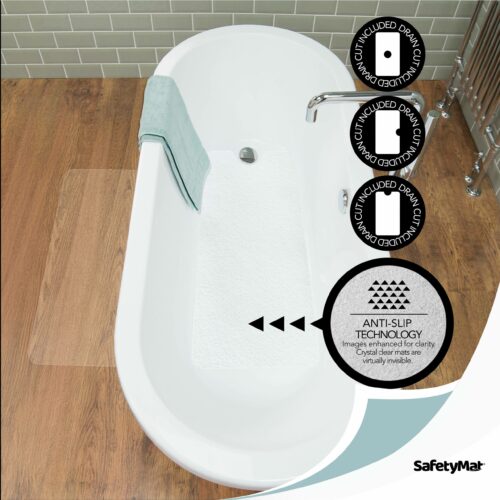
A custom printed non-slip mat is designed to become part of the room rather than a loose accessory sitting on top of it. With an adhesive-backed, waterproof construction, it can provide a stable traction layer on appropriate smooth indoor surfaces. The thin profile matters just as much as the pattern. There is less height to step over and less chance of the mat shifting when a child runs in from the pool or an older adult turns toward the vanity.
Customization also has a safety role beyond decoration. A contrasting design can make the edge of a shower area easier to see. A path of shapes can help children understand where to stand. In a shared home, a clearly defined dry-standing zone near the sink or toilet can encourage better routines without adding signs or equipment that make the room feel clinical.
Choose the room before choosing the print
The best design starts with where the mat will be used and how people move through that space. A beautiful print cannot make up for coverage that is too small or placement that misses the spot where water actually lands.
Bathrooms and showers
Bathrooms call for calm, practical coverage. In a shower, the mat should fit the standing area without folding up the walls or interfering with drains. In front of a tub, shower, or vanity, consider the path a person takes while wet. That is often a better placement guide than the center of the floor.
Soft stone looks, subtle terrazzo, ocean-inspired colors, or a print that echoes existing tile can give a bathroom a finished look while adding traction. For children’s bathrooms, simple animals, stars, or color-blocked shapes can feel playful without making the space visually busy. Avoid overly intricate artwork if it will hide soap residue or make cleaning harder to judge.
Kitchens and laundry rooms
Kitchen slips often happen where water, ice, grease, or dishwashing splashes meet smooth flooring. The useful zone is typically in front of the sink, dishwasher, or main prep counter. A custom mat can visually frame that work area while keeping the floor surface easier to navigate in socks or bare feet.
Here, darker or mid-tone patterns tend to be practical because they do not show every small splash between cleanings. Still, do not choose a print solely to disguise mess. A surface should be wiped promptly when spills occur. The mat supports traction, but good housekeeping remains part of a safer kitchen.
Laundry rooms benefit from the same thinking. A narrow, low-profile printed mat in front of the washer and dryer can bring traction and color to a room that often has hard flooring, limited light, and occasional water leaks.
Stairs, entries, and shared spaces
On stairs, a customized pattern can help make each tread easier to recognize, particularly when the stair color blends into the surrounding floor. High-contrast stripes, coordinated blocks, or a repeated motif can improve visual definition without the bulk of a traditional stair runner.
For light commercial or shared residential spaces, customization can support clear wayfinding. Think of a subtle branded color, a directional pattern, or an attractive boundary around an entry transition. The goal is not to turn the floor into signage. It is to make safer movement feel natural for guests, residents, and staff.
What makes a good custom printed non slip mat
Not every decorative floor covering is suitable for a wet, high-traffic area. Before falling in love with a print, look at the performance details. A safety-focused mat should be waterproof, made for the intended indoor setting, and designed with a dependable adhesive backing that helps it stay put.
Thickness is another practical consideration. Plush rugs can feel comfortable, but they hold moisture and create a raised edge. Ultra-thin mats are easier to step onto, easier to wipe down, and better suited to door clearances, shower thresholds, and busy family routines. For many homes, that low profile is the difference between adding protection and adding another obstacle.
Surface texture should be comfortable enough for bare feet while still providing traction. If the mat is for a shower or frequent wet use, prioritize a product made for that level of exposure. A kitchen mat and a shower mat may share a design style, but they do not always need the same format or coverage.
Material care matters, too. Mold-resistant, easy-clean surfaces reduce the burden that comes with fabric rugs and suction-cup mats. That does not mean maintenance disappears. It means the routine can be simpler: wipe the surface regularly, remove residue as needed, and inspect the edges occasionally for secure adhesion.
Design for real life, not just the product photo
The most successful custom designs make a room easier to use. Start with the existing floor, wall color, and lighting. If the room is small, a light background with a defined pattern can add interest without making the floor feel crowded. If the room has white tile and bright lighting, a warmer color or stronger border can help establish the safe standing area.
Think about who uses the space. A grandparent may appreciate a clear visual change between the shower floor and surrounding tile. A young child may respond well to recognizable footprints or playful markers that create a consistent place to stand. A household with pets may need a durable pattern that looks good despite frequent cleanup.
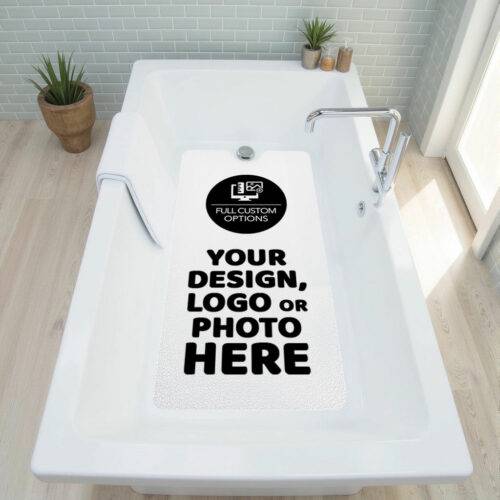
Personalization does not have to mean putting a name or a photograph on the floor. It can be as simple as selecting a custom size, coordinating the mat with a favorite wallpaper, or choosing a pattern that makes a formerly utilitarian room feel cared for. SafetyMat approaches this as a home upgrade: protection should support the room’s design, not compete with it.
Measure, prep, and install with care
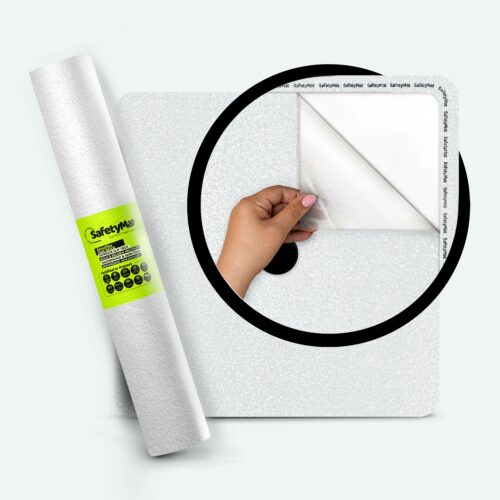
Peel-and-stick installation is straightforward, but preparation determines how well the mat performs. Measure the usable area, including clearance around drains, doors, and fixtures. If you are covering a shower floor, account for the drain location and avoid blocking water flow. For stairs, measure each tread rather than assuming they are all identical.
Before installation, the surface should be smooth, clean, and completely dry. Soap film, dust, oil, moisture, and loose debris can weaken adhesion. Follow the product-specific guidance for compatible surfaces and cure time, especially with newly installed flooring, textured surfaces, grout-heavy tile, or finishes that may not accept adhesive well.
When applying the mat, work slowly from one side to the other to avoid trapped air and wrinkles. Press firmly across the full surface and pay special attention to the edges. Once installed, give it a quick visual and touch inspection before regular use. If an edge lifts or the surface becomes damaged, address it promptly rather than hoping it will settle back down.
A safer room can still look like your home
A custom printed mat will not replace attention around spills, proper lighting, handholds where needed, or a thoughtful accessibility plan. It can, however, remove a common frustration: having to choose between a safer floor and a room you enjoy looking at.
Start with the spot where your household is most likely to step on a wet or slick surface. A well-placed, low-profile design can turn that everyday risk into a simple ritual of care – peel, stick, protect, and get on with the day.