Waterproof Mat for Entryway Floors That Stay Safer
Table of contents
Rain does not stay outside just because the front door closes. It comes in on sneakers, dog paws, umbrellas, grocery bags, and boots, then spreads across smooth flooring where one rushed step can become a slip. A waterproof mat for entryway spaces gives that moisture a place to land while helping protect the people and floors inside your home.
The best option does more than catch dirt. It should provide reliable traction, stay flat underfoot, resist moisture buildup, and fit the look of the space. For homes with children, older adults, guests, pets, or simply a busy daily routine, entryway protection is a small upgrade with a practical payoff.
Why entryway floors need more than a decorative rug
A traditional welcome mat may look inviting, but it is not always built for wet indoor traffic. Thick fabric mats can absorb water until they feel damp, shift as people step on them, or create a raised edge that catches a toe. Once moisture stays trapped beneath a loose rug, it can also leave the floor underneath slick or difficult to clean.
This is especially noticeable on tile, vinyl, laminate, sealed concrete, and other hard, smooth surfaces. A few drops near the door may not seem urgent, but the risk increases when wet shoes repeatedly cross the same spot. Add a backpack, packages, or a child running in from the rain, and people may not notice the floor condition until after they lose their footing.
A low-profile waterproof surface treatment addresses the hazard at floor level. Rather than creating another bulky layer at the door, it can help create a more stable walking zone where water is most likely to collect.
What a waterproof mat for entryway use should do
Not all water-resistant mats solve the same problem. Some are designed mostly to scrape off dirt outside. Others are soft interior rugs meant to absorb a little moisture. For an indoor entryway, the most useful solution balances water protection, traction, and everyday appearance.
Look for a surface that is waterproof rather than simply absorbent. Waterproof materials do not hold moisture the way a fabric rug can, so they are easier to wipe clean after a wet day. A slip-resistant finish helps support more confident footing when shoes or paws are damp.
Profile matters, too. An ultra-thin mat or adhesive-backed surface can reduce the curled corners and lifted edges associated with loose mats. It also makes the entry easier to navigate with a stroller, walker, rolling bag, or vacuum. For many households, less bulk means fewer things to adjust, straighten, shake out, or wash.
Mold resistance is another meaningful feature in a space that repeatedly sees moisture. No floor product replaces regular cleaning, but a material that does not soak up water is far easier to keep fresh than one that remains wet after every storm.
Choose the right placement before choosing the size
The most effective entryway mat is placed where people naturally step after crossing the threshold. That may be directly inside the front door, beside a garage entry, at a mudroom door, or near a patio door that leads in from the pool or yard.
Watch the traffic pattern for a day or two. If people enter, turn right to remove shoes, and then walk toward the kitchen, protect that full turning path rather than only the small square immediately inside the door. If the door swings inward, make sure the mat does not interfere with clearance. A thin surface is often a better fit in tight foyers where every inch matters.
In a narrow hallway entry, a runner-style layout may make more sense than a wide rectangle. In a mudroom, a larger coverage area can protect the zone around shoe storage, pet leashes, and coats. The goal is not to cover the entire room. It is to create a defined, safer landing area before wet feet reach the rest of the home.
Adhesive-backed mats and loose mats have different jobs
A loose mat can be useful for catching heavy mud outdoors or for a temporary seasonal setup. It is easy to lift and replace, but it can shift, bunch, or retain water depending on its backing and material. If you choose one, make sure it lies flat and is designed for the location where you use it.
An adhesive-backed, low-profile mat is better suited to indoor areas where movement and tripping edges are a concern. When installed on a clean, dry, compatible surface, it stays in place rather than traveling across the floor with every step. That stability is particularly helpful near a door where people often enter quickly with wet shoes.
The trade-off is that peel-and-stick products require thoughtful placement. Measure first, clean the surface thoroughly, and apply the mat only to an appropriate smooth indoor floor. Do not assume every surface, finish, or exterior exposure is suitable. Textured flooring, loose grout, damaged flooring, and outdoor conditions may call for a different solution or additional preparation.
Make safety work with your home’s design
Safety equipment should not make your entryway feel clinical or unfinished. The entrance is the first part of your home that family and guests see, so color, pattern, and proportion all matter.
A neutral design can blend into wood-look vinyl, stone-look tile, or a minimalist foyer. A subtle pattern can help disguise everyday dirt between cleanings. In homes where visual clarity is helpful for older adults or guests, a mat that contrasts gently with the surrounding floor can make the walking zone easier to identify without looking harsh.
This is where surface design becomes part of practical protection. A thoughtfully chosen mat can frame the doorway, define a mudroom zone, and support safer movement at the same time. SafetyMat approaches this idea with thin, waterproof, design-conscious surfaces that help safety feel like a natural part of the room.
Installation: peel, stick, protect
A clean installation starts with a clean floor. Sweep away grit, remove residue, and let the surface dry completely. Adhesive needs direct contact with the floor, not dust, wax, moisture, or leftover cleaner.
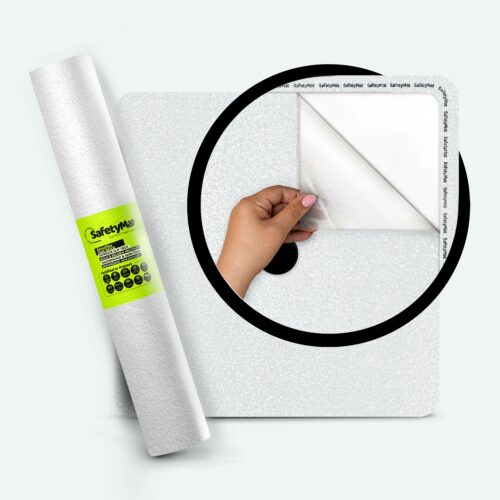
Before removing the backing, place the mat in position and check the door swing, wall spacing, and walking path. Once you are confident in the layout, apply it gradually rather than dropping it all at once. Press from one side to the other to help prevent trapped air and to support full contact across the surface.
After installation, inspect the perimeter. The edges should sit flat and secure. If the floor is unusually textured, uneven, damp, or damaged, pause before applying any adhesive-backed product. A stable foundation is part of a safer result.
Keep the entryway easy to maintain
The advantage of a waterproof mat is not that it never needs attention. It is that routine care is simple. Wipe away water after storms, sweep off dry debris, and clean the surface with a product appropriate for its material. Avoid harsh tools or cleaners that can wear down the finish.
It also helps to treat the entryway as a small system rather than relying on one mat alone. Keep umbrellas in a drip tray, give wet shoes a designated spot, and encourage family members to remove muddy footwear before walking farther inside. When the entry has an organized landing zone, water and dirt are less likely to migrate into kitchens, bathrooms, and hallways.
For households with dogs, place a towel and paw-cleaning supplies nearby. For children, a lower hook or basket for rain gear can reduce the trail of wet jackets and backpacks across the floor. These details do not need to be elaborate. They simply make the safer choice the easiest choice.
A small surface upgrade that protects daily routines
The front door is one of the busiest transitions in any home. People arrive distracted, carrying things, hurrying to get out of the weather, or helping someone else through the doorway. That is exactly why the floor beneath them deserves more attention than a decorative rug can always provide.
A waterproof, slip-resistant, low-profile mat can help turn a wet threshold into a cleaner, more dependable place to step. Choose coverage that matches your traffic pattern, install it carefully, and keep it clean. Then every return home can begin with a little more comfort, traction, and care.