How to Prevent Bathroom Slips Without Bulky Rugs
Table of contents
- Start With the Wettest Walking Paths
- Add Traction Where Bare Feet Need It Most
- Keep Water From Spreading Across the Floor
- Improve Lighting for Nighttime Bathroom Trips
- Support Safe Movement, Not Just Safe Flooring
- Choose Materials That Are Easy to Keep Clean
- How to Prevent Bathroom Slips in a Rented Home
- Make the Safer Choice the Easier Choice
A wet footprint between the shower and vanity can turn an ordinary morning routine into a painful fall. Learning how to prevent bathroom slips starts with looking beyond the bath rug. The safest bathrooms use several small, well-placed protections that keep water under control, improve traction, and support steady movement without making the room feel clinical or crowded.
Bathrooms are unusually challenging because smooth surfaces, bare feet, soap residue, and limited space all meet in one room. A solution that works for a guest powder room may not be enough for a busy family bath, a child’s tub area, or a bathroom used by an older adult. The goal is not to fill every surface with equipment. It is to make the places people step, turn, and transfer feel secure.
Start With the Wettest Walking Paths
Most slips happen in predictable places. Notice where water lands after showers, baths, handwashing, and toilet use. Then follow the path a person takes from the tub or shower to the towel, sink, toilet, and door. Those transition points deserve the most attention.
Focus first on four areas:
- The shower or tub floor, where water and body wash reduce traction
- The floor immediately outside the tub or shower
- The space in front of the sink, especially in bathrooms used by children
- The area around the toilet, where splashes and nighttime trips can create unexpected hazards
A traditional bath rug can catch some water, but it is not automatically a safety solution. Loose rugs can bunch, shift, curl at the corners, or become saturated. Thick styles can also create a raised edge that is difficult for shuffling feet, walkers, or wheelchairs to clear. If you use a rug, choose one with a secure backing, keep it flat, and replace it when the backing loses its grip. In high-use areas, a low-profile adhesive safety surface may offer a more stable alternative.
Add Traction Where Bare Feet Need It Most
The inside of the shower or tub is often the highest-risk surface in the room. Smooth fiberglass, acrylic, porcelain, and tile can all become slick when they are wet. Suction-cup mats are familiar, but they can trap moisture underneath, collect residue, and lose their hold over time. They also need to be removed and cleaned regularly to avoid mildew.
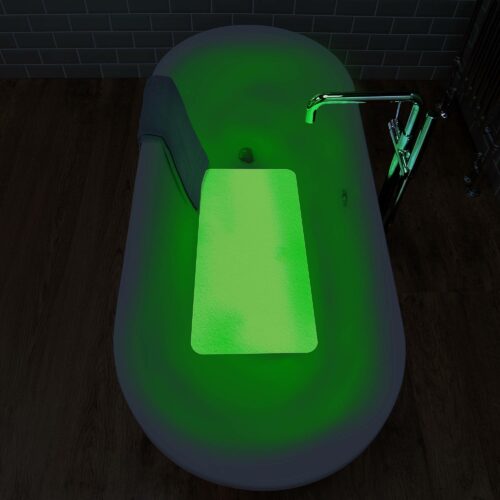
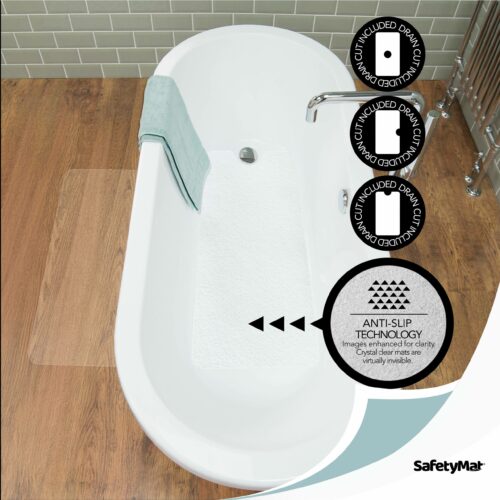
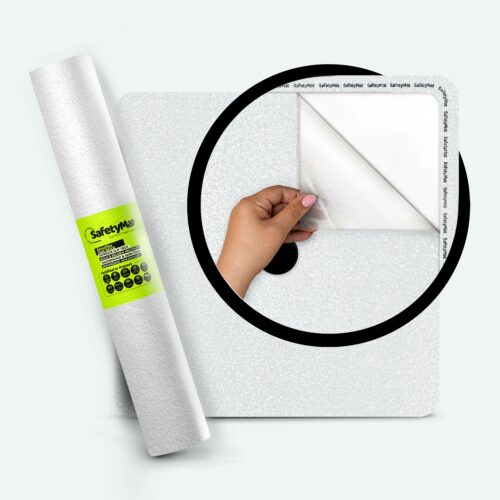
A thin, waterproof peel-and-stick shower mat or traction covering sits closer to the surface, without the lifted edges of many portable mats. It can provide a more finished look while helping feet make better contact with the floor. For a bathroom renovation or rental-friendly refresh, this approach can be a practical middle ground between doing nothing and replacing the entire tub or shower base.
Surface choice matters. Before applying any adhesive product, clean away soap film, oils, and residue, and let the area dry completely. Follow the product instructions for compatible materials, cure time, and placement. Textured tile, damaged finishes, and heavily grouted surfaces may need a different solution than a smooth shower pan.
Outside the shower, consider a low-profile traction mat or vinyl surface designed for wet indoor spaces. Choose a size that covers the actual landing area, not just a narrow strip where someone may miss it while stepping out. A waterproof, mold-resistant option is especially useful in bathrooms shared by several people.
Keep Water From Spreading Across the Floor
Better traction helps, but water management is just as important. A leaking shower curtain, poorly aimed showerhead, or dripping body can create a slick path across the room before anyone notices it.
Check whether the shower curtain liner reaches inside the tub and stays there during use. Replace warped shower doors, worn seals, or curtains that allow water to escape. If children tend to splash during bath time, keep absorbent towels within arm’s reach and build a quick floor check into the cleanup routine.
Ventilation also plays a role. Run the bathroom fan during bathing and for a while afterward to help reduce lingering humidity. Open a window when conditions allow. This will not eliminate standing water, but it helps surfaces dry faster and limits the damp conditions that encourage mildew.
Do not overlook slow plumbing problems. A toilet that sweats, a vanity pipe that drips, or a toilet base with moisture around it can create recurring hazards. Fixing the source protects both the floor and the people using it.
Improve Lighting for Nighttime Bathroom Trips
A bathroom can have excellent traction and still feel unsafe when it is dark. Nighttime falls often happen because a person is moving quickly, half-awake, or trying not to turn on a bright overhead light.
Use clear, even lighting around the doorway, toilet, sink, and shower entrance. A plug-in night-light, motion-activated light, or low-level toe-kick light can make the route easier to see without disrupting sleep. Choose warm, glare-controlled lighting rather than a single harsh bulb that creates deep shadows.
Keep the route to the bathroom clear as well. Laundry baskets, scales, stools, cords, and small trash cans can become trip hazards when visibility is low. This matters for everyone, but it is particularly helpful for older adults, young children, and guests who do not know the room’s layout.
Support Safe Movement, Not Just Safe Flooring
A bathroom slip can begin with a loss of balance, not just a slippery surface. People often need extra stability when stepping over a tub wall, lowering onto the toilet, standing after a bath, or reaching for a towel.
Properly installed grab bars can provide reliable support near the shower, tub, and toilet. They should be anchored to appropriate structural support or installed using hardware rated for the wall type and intended load. Towel bars, soap dishes, and shower doors are not substitutes. They may look sturdy, but they are not designed to hold a person’s weight during a fall.
A shower seat may help someone who has difficulty standing for the full length of a shower. It is not necessary for every household, and it does take up space, but it can add independence for an aging parent, a person recovering from an injury, or anyone with limited balance. Pair it with reachable controls and a stable place for soap and shampoo so there is less bending and twisting.
For young children, supervise bath time closely and avoid relying on products alone. Teach children to sit rather than stand in the tub, keep toys from spreading across the floor, and dry feet before they run into the hallway. Safety works best when the room setup and the household routine support each other.
Choose Materials That Are Easy to Keep Clean
Soap scum, conditioner, bath oils, and cleaning-product residue can gradually reduce traction. A surface may look clean but still feel slick under wet feet. Regular maintenance keeps the protection you add working as intended.
Use cleaning methods that are appropriate for your shower, tile, flooring, and slip-resistant surface. Avoid leaving a film from oily products or overly concentrated cleaners. Rinse well after cleaning, especially inside the shower, and check that adhesive mats or coverings remain firmly attached at the edges.
For bathrooms that see frequent use, set a simple weekly check: wipe down the shower floor, look for pooling water, inspect rugs or mats for movement, and make sure lighting is working. This takes only a few minutes and can reveal a loose edge, worn backing, or plumbing drip before it becomes a bigger problem.
How to Prevent Bathroom Slips in a Rented Home
Renters may not be able to replace flooring, drill into walls, or make permanent changes. That does not mean the bathroom has to stay slippery. Begin with removable or low-impact upgrades such as better lighting, a securely backed low-profile floor mat, shower traction treatment, and an organized layout that keeps essentials close by.
If you need grab bars or notice damaged flooring, contact the property manager before making changes. Ask about approved installation options and report leaks promptly. Water damage can make surfaces less stable over time, and it is easier to address when documented early.
SafetyMat’s thin peel-and-stick safety surfaces can be a design-conscious option for smooth bathroom zones where bulky rugs or traditional suction mats are not the right fit. Select a style that suits the room, but make traction and correct installation the deciding factors.
Make the Safer Choice the Easier Choice
The best bathroom safety upgrades do not require anyone to remember a complicated new routine. Put towels where people naturally reach for them. Keep daily products at a comfortable height. Use surfaces that stay flat, clean easily, and help control slick landing zones. If one bathroom is used by people with different needs, prioritize the person who needs the most stability.
A safer bathroom should still feel like your bathroom: clean, comfortable, and suited to the people who use it. A few thoughtful changes now can make every shower, bedtime routine, and overnight trip to the sink feel more secure.